
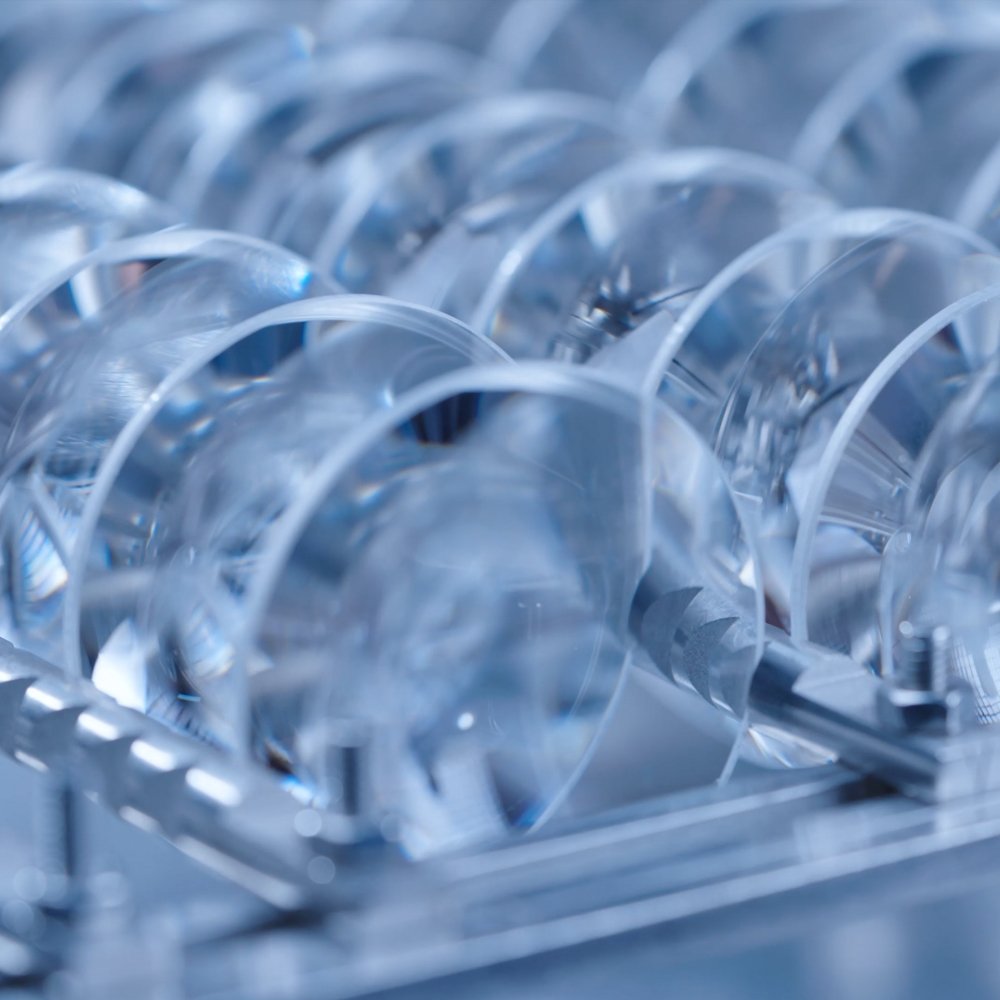

For optical components—where precision is measured in microns—tolerance isn’t just a technical specification; it’s a guarantee of performance, reliability, and compatibility. At Joint Precision, we pride ourselves on achieving tolerances as tight as ±0.005mm for our optical components, but what does this tiny measurement actually mean for your products? In this blog, we break down the significance of ±0.005mm tolerance, why it matters for critical industries, and how it sets our optical components apart from the competition.
To put ±0.005mm into perspective: it’s approximately 1/20th the thickness of a human hair (which averages 0.1mm). For optical components like lens barrels, optomechanical parts, and LiDAR sensor housings, this level of precision ensures that every part fits and functions exactly as designed—no gaps, no misalignment, no compromises. For example, a lens barrel with ±0.005mm tolerance maintains perfect coaxial alignment of lens groups, preventing light scattering, distortion, or blurred imaging. In LiDAR systems, this tolerance ensures that sensor components are positioned accurately, delivering reliable distance measurements for autonomous vehicles.
±0.005mm tolerance directly impacts the functionality of optical components in critical industries. In automotive ADAS, for instance, DMS/OMS camera components with tight tolerance ensure that driver monitoring systems capture clear, accurate images—even in low-light conditions—helping to prevent accidents. In medical equipment, precision optical components with ±0.005mm tolerance ensure that diagnostic devices deliver accurate results, where even a tiny deviation could compromise patient care. In aerospace, this tolerance ensures that optical systems withstand extreme vibration and temperature changes, maintaining performance in the harshest environments.
Achieving ±0.005mm tolerance is no easy feat—it requires advanced technology, strict quality control, and expertise. At Joint Precision, we use state-of-the-art CNC machining equipment, paired with precision inspection tools from CMM, KEYENCE, and Mitutoyo, to ensure every component meets our strict tolerance standards. We also control environmental factors (like temperature and humidity) during machining, as even minor fluctuations can cause material expansion or contraction, affecting precision. Our in-house design and manufacturing team works closely with clients to optimize component designs for tight tolerances, ensuring that every part is both functional and manufacturable.
For your optical component projects, ±0.005mm tolerance isn’t just a selling point—it’s a necessity. It ensures that your components align perfectly, perform reliably, and last longer, giving you a competitive edge in industries where precision matters most. Whether you’re developing optical hardware for machine vision, automotive, or medical applications, Joint Precision’s ±0.005mm tolerance capabilities will ensure your products meet the highest standards of quality and performance.
Need precision optical components with ±0.005mm tolerance? Get a custom quote from Joint Precision today.
Small Batch Prototyping vs Mass Production for Optics
When developing optical components—from custom lens barrels to optoelectronic enclosures—manufacturers face a critical decision: small batch prototyping or mass production? Both approaches have distinct advantages, but choosing the right one depends on your project goals, timeline, budget, and market needs. At Joint Precision, we specialize in both small batch prototyping (1–50pcs) and scalable mass production for optics, helping our clients navigate this decision to optimize their product development process and maximize ROI.
Small batch prototyping is the ideal choice for the early stages of product development, especially for optical components where design iteration is critical. It allows you to test and refine your design before committing to large-scale production, reducing the risk of costly errors or design flaws. For optical components—where even minor adjustments to geometry or material can significantly impact performance—prototyping is essential. Our small batch prototyping services include rapid 3D printing, CNC machining, and vacuum casting, allowing you to get functional prototypes in days, not weeks. This speed enables you to test fit, form, and function, gather feedback from engineers or end-users, and iterate on your design until it meets your exact specifications.
Flexibility is another key advantage of small batch prototyping for optics. Whether you need to adjust material selection (e.g., switching from aluminum to a specialized plastic), modify component geometry (e.g., refining lens barrel dimensions), or test different surface treatments (e.g., anodizing vs. polishing), small batches allow for quick changes without wasting large quantities of materials or time. This flexibility is especially valuable for startups, niche industries, or projects with evolving requirements—such as custom machine vision lenses or specialized aerospace optical components. Small batch prototyping also minimizes upfront investment, making it easier to validate market demand before scaling up.
Mass production, on the other hand, is optimal once your design is finalized and demand is confirmed. For optical components that require consistency across thousands of units—such as automotive ADAS camera parts or consumer electronics lenses—mass production leverages economies of scale to reduce per-unit costs. At Joint Precision, we seamlessly transition from small batch prototyping to mass production, using the same precision CNC machining, injection moulding, and quality control processes to ensure consistency between prototypes and final products. This continuity eliminates the need to switch manufacturers, saving time and reducing the risk of misalignment between design and production.
So, which approach is right for you? If you’re in the design, testing, or validation phase, small batch prototyping is the way to go—it’s fast, flexible, and cost-effective. If you’re ready to scale and meet high demand, mass production will deliver efficiency and cost savings. At Joint Precision, we offer both, with the flexibility to adapt to your project’s changing needs. Whether you need 1 prototype or 10,000 units, we deliver precision, speed, and reliability—every time.
Unsure whether small batch prototyping or mass production is right for your optical project? Discuss your project with our team of precision manufacturing experts.
