

For hardware startups, R&D teams and optical product developers, slow prototyping is one of the biggest barriers to iteration speed, market launch and project momentum.
A 4–6 week lead time for a single lens barrel or camera housing prototype does not just delay production—it can delay design validation, miss trade show windows, slow investor milestones and extend product development cycles by months.
Rapid prototyping for optical components does not mean cutting corners on precision. It means building a workflow optimized for speed, stability and tight-tolerance consistency, without sacrificing dimensional accuracy or surface quality.
Here is how reliable 3–5 day optical prototyping is achieved, even for complex, tight-tolerance parts.
1. Pre-Positioned Material Inventory for Zero Lead Time Delay
The single biggest cause of slow prototyping is raw material lead time. For rapid optical prototyping, common high-performance alloys including 7075-T6 aluminum, titanium and 304 stainless are stocked in ready-to-machine sizes, eliminating material ordering delays.
This allows machining to begin within 24 hours of drawing confirmation and quotation approval.
2. Dedicated Prototyping Workflow & Machining Cell
Production orders often take priority over prototypes in general CNC shops, leading to unexpected delays and missed deadlines. A true rapid prototyping capability requires a dedicated machining cell, separate programming queue and fixed priority for prototype orders.
For optical components, this also means engineers with optical design experience review drawings before machining, identifying potential interference, tolerance risks and assembly issues early—saving hours of rework and iteration time.
3. Full Quality Control, Even for Fast-Turn Prototypes
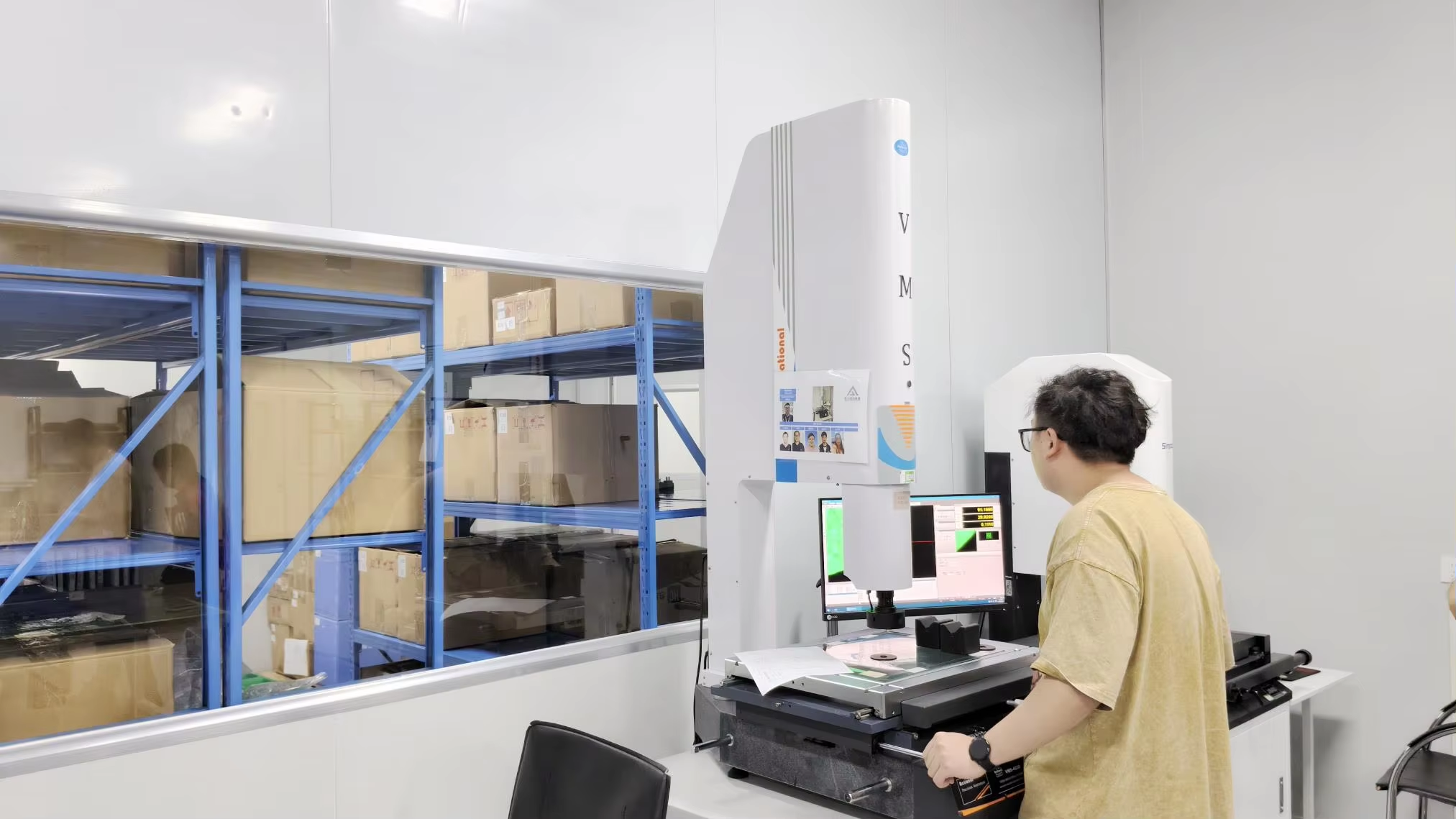
Speed does not mean skipping inspection. Every rapid prototype includes critical feature dimensional verification, surface quality check and full documentation, so you can use the part directly for design validation, assembly testing and customer demonstration.
Many teams have experienced “fast but useless” prototypes that fail fit testing, assembly or basic tolerance checks. True rapid prototyping delivers speed and usable, production-ready parts.
Real Project Impact
A European computer vision engineering team required a custom camera housing prototype for a trade show demonstration, with a hard 5-day deadline. Drawing review and optimization was completed overnight, machining and surface treatment finished in 3 days, with full inspection and delivery ahead of schedule.
The prototype was used to secure new customer partnerships and validate final production design—all without delay.
For teams with tight deadlines for optical component prototyping, drawings can be submitted for a 24-hour quotation and clear, guaranteed lead time.
